
A Different Vision for Reading Education Exploring
A Different Vision for Reading Education: Exploring a Holistic Approach
This article looks into a fresh way of thinking about reading education, called 'A Different Vision for Reading Education'. It focuses on making reading more engaging and effective for pupils. We'll explore why current methods sometimes fall short and what this new approach suggests for teachers, school libraries, and the curriculum. It really wants to get kids excited about books and reading, moving away from just following rigid rules. So, let's see what this different vision is all about.
Key Insights
- Teachers are extremely important in making reading fun, more so than just sticking to set methods.
- The curriculum needs to change so it balances learning facts with a student's own growth.
- Using good, interesting books helps pupils learn more about the world and build up their vocabulary.
- Trying to use themes in reading lessons can sometimes make things messy and less effective.
- School libraries, especially with new apps, can help teachers manage books and get pupils reading more.
Reimagining Reading Education: An Introduction to 'A Different Vision for Reading Education'
Addressing Current Challenges in Literacy
It's no secret that literacy education faces some tough hurdles. Traditional methods often fall short in engaging pupils and fostering a genuine love for reading. We're seeing a disconnect between what's taught and what kids actually want to read. There's also the issue of time constraints, with teachers struggling to fit everything in. It's a bit like trying to cram too much into a suitcase — something's gotta give. We need to look at what's not working and figure out how to make things better.
The Need for a New Educational Paradigm
Let's face it, the old ways aren't always the best ways. We need a fresh approach to reading education, one that moves beyond rote learning and embraces engagement and enjoyment. Think of it like this: are we teaching kids how to read, or are we teaching them to want to read? There's a big difference. A new paradigm would prioritise:
- Student choice in reading materials
- Teacher enthusiasm and flexibility
- A focus on understanding and enjoyment, not just test scores
It's about creating a learning environment where reading isn't a chore, but an adventure. We need to shift from a method-driven approach to a child-centred one, where the joy of reading is at the heart of everything we do.
Understanding 'A Different Vision for Reading Education'
'A Different Vision for Reading Education' (known in Dutch as Een andere visie op leesonderwijs) is all about shaking things up. It's a call for a more holistic and engaging approach to literacy, one that puts the child's love of reading first. It acknowledges the limitations of current methods and proposes a new way forward. It's not just about teaching kids to decode words; it's about opening up a world of possibilities through reading. It's about:
- Empowering teachers to use their own judgement
- Prioritising quality children's literature
- Creating a reading culture within the classroom
The Teacher's Pivotal Role Versus Method-Driven Instruction

Balancing Teacher Autonomy and Prescribed Methods
It's a constant tug-of-war: how much should teachers stick to the script of a reading method, and how much freedom should they have to do what they think is best? Finding the right balance is key. Methods offer structure, but teacher autonomy allows for adapting to individual student needs. It's about using the method as a tool, not letting it dictate every move. Think of it like a recipe — you can follow it closely, but a good cook knows when to tweak it to make it perfect. The current situation in reading education brings much discontent.
The Impact of Teacher Enthusiasm on Reading Engagement
Let's be honest, no one gets excited about a textbook. But a teacher who's genuinely passionate about a book? That's contagious. Teacher enthusiasm is a massive factor in getting kids hooked on reading. If a teacher loves a book, they'll find ways to bring it to life, making it way more engaging than any worksheet ever could. It's about creating a buzz around reading, making it something kids want to do, not something they have to do. The quality of reading promotion depends on the teacher's professionalism.
Cultivating 'The Master's Eye' in Pedagogy
'The Master's Eye' — it sounds a bit grand, but it's really about a teacher's ability to see each child as an individual. It's about understanding their strengths, their weaknesses, and what makes them tick. It's about knowing when to push them, when to offer support, and when to just let them explore. It's a pedagogical starting point for effective education. It's about having that instinct for what each student needs to succeed. It involves:
- Having personal interest in each child.
- Knowing each child's individual qualities.
- Understanding how a child fits in the group.
The challenge for every teacher is to find the balance between effective and efficient education. In the field of reading, the role of reading promotion is rarely considered: the terms 'effective' and 'efficient' seem to apply solely to method use, and the texts are left to be provided.
Curriculum Reform and Its Implications for Reading
Curriculum 2030: Balancing Knowledge and Personal Development
Curriculum reform is underway, aiming to better align education with society's needs. The 'Curriculum 2030' initiative seeks a better balance between knowledge, personal development, and social skills. This involves addressing issues such as curriculum overload and improving cohesion across different educational stages. The goal is to provide schools and teachers with more clarity and autonomy in their choices. The current curriculum, dating back to 2006, is being revised to address these critical points.
The reforms aim to ensure that the curriculum is relevant, engaging, and prepares students for the challenges and opportunities of the 21st century. This includes a focus on developing well-rounded individuals with strong academic skills, personal qualities, and the ability to contribute positively to society.
Enhancing Cohesion Across Educational Stages
One of the key aims of curriculum reform is to improve the transition between primary, secondary, and further education. Currently, there are often disconnects that can hinder student progress. A more cohesive curriculum would ensure a smoother progression of learning, building on prior knowledge and skills. This involves:
- Developing clear learning pathways.
- Aligning assessment methods.
- Promoting collaboration between schools and institutions.
This education policy aims to create a more seamless educational experience for students, reducing the stress and challenges associated with transitioning between different stages.
Fostering Language Awareness and Communication Skills
Language awareness and communication skills are vital for success in all areas of life. The reformed curriculum places a strong emphasis on developing these skills, enabling pupils to communicate effectively and confidently. This includes:
- Explicit instruction in language conventions.
- Opportunities for authentic communication.
- Developing critical literacy skills.
By focusing on these areas, the curriculum aims to equip students with the language skills they need to succeed in education, employment, and beyond. It's about helping them understand how language works and how to use it effectively in different contexts. The curriculum will also focus on qualitative interaction to promote language and thinking development.
Integrating Quality Texts for Enhanced Learning
The Power of Challenging and Engaging Content
Using texts that push pupils a little is key to real learning. It's not just about picking any old book; it's about finding material that sparks curiosity and makes them think. When kids are genuinely interested, they're more likely to stick with it, even when it gets tough. This approach helps them develop a love for reading and a willingness to tackle complex ideas. It's about making reading an adventure, not a chore. Students recognised significant benefits of literary texts, including improvements in language skills and critical thinking.
Expanding World Knowledge Through Diverse Texts
Reading isn't just about decoding words; it's about opening up new worlds. Diverse texts expose students to different cultures, perspectives, and ideas. This helps them build a broader understanding of the world and their place in it. It's about moving beyond the familiar and embracing the unknown.
- Exposure to different cultures
- Understanding diverse perspectives
- Building a broader world view
Using a range of texts helps students connect with different viewpoints and develop empathy. It's about creating global citizens who are informed and engaged.
Developing Vocabulary and Language Proficiency
Quality texts are rich in language. They introduce pupils to new words and sentence structures, helping them expand their vocabulary and improve their language skills. It's about building a strong foundation for effective communication. The more they read, the better they become at understanding and using language. This is how they learn to express themselves clearly and confidently. It's a gradual process, but the rewards are immense. The impact of teacher enthusiasm on reading engagement is undeniable.
| Text Type | Vocabulary Exposure | Language Skills Developed |
|---|---|---|
| Fiction | Rich and varied | Comprehension, expression |
| Non-fiction | Technical and specific | Clarity, precision |
| Poetry | Figurative and evocative | Creativity, interpretation |
The Limitations of Thematic Approaches in Reading Methods
The Pitfalls of 'Confetti Education'
Traditional reading methods often incorporate thematic approaches, grouping texts around topics like 'seasons' or 'animals'. While seemingly engaging, this can lead to what's been termed 'confetti education' — a superficial scattering of knowledge without genuine depth. The core issue is that these themes are often pre-determined by the method, rather than arising organically from the children's interests or the teacher's expertise. This can result in a disjointed learning experience, where the focus shifts rapidly between unrelated concepts, hindering true comprehension and retention.
Teacher-Led Thematic Integration for Deeper Learning
Not all thematic approaches are detrimental. The key difference lies in ownership. When a teacher selects a theme based on their own passion and the specific needs of their pupils, the learning experience becomes far more meaningful. This allows for genuine integration across multiple subjects, creating a richer and more cohesive understanding. Teacher enthusiasm is infectious, and when they are invested in the theme, pupils are more likely to be engaged as well. Language-based pedagogy can be very effective.
Motivation and Engagement Through Authentic Choices
Ultimately, the success of any reading method hinges on student motivation. Pre-packaged thematic units often fail to inspire genuine interest because they lack authenticity. Children are more likely to engage with texts that resonate with their own experiences and interests. Providing students with choices — allowing them to select books and topics that genuinely appeal to them — is far more effective than forcing them to engage with a pre-determined theme. This fosters a sense of ownership and encourages a lifelong love of reading.
The problem with many thematic approaches is that they prioritise breadth over depth. They attempt to cover a wide range of topics, but often fail to provide students with the opportunity to truly explore any one subject in detail. This can leave students feeling overwhelmed and disconnected, hindering their ability to develop a deep and lasting understanding.
Here are some reasons why teacher-led thematic integration is better:
- Teacher enthusiasm is higher.
- Themes are more relevant to pupils.
- Integration across subjects is more seamless.
Why Traditional Methods Fail to Inspire Reading Pleasure
The Disconnect Between Methodologies and Child Literature
Traditional reading methods often feel miles away from the vibrant world of children's books. Instead of sparking joy, they can turn reading into a chore. Methodologies often dissect texts, focusing on grammar and comprehension exercises, stripping away the magic and excitement that draws children to stories in the first place. It's like taking apart a toy to understand how it works, only to find it's no longer fun to play with.
The Importance of Context in Reading Engagement
Context is everything. When excerpts from children's books are plucked out and used as mere 'practise texts', the entire point is missed. The characters, the plot, the world the author created — all of it vanishes. Without context, reading becomes a dry, uninspiring task. It's like watching a single scene from a movie without knowing anything about the story; it just doesn't make sense, and it certainly isn't engaging. The evolution of reading comprehension instruction should focus on maintaining context.
Teacher Enthusiasm as a Catalyst for Reading Joy
Ultimately, a teacher's enthusiasm is the secret ingredient. No method, no matter how well-designed, can replace a teacher who genuinely loves books and shares that love with their pupils. If a teacher is excited about a book, that excitement is contagious. It creates a positive atmosphere where children are more likely to embrace reading.
It's not about the perfect method; it's about the teacher's passion. A teacher who is passionate about reading can make even the most challenging text come alive. It's about creating a culture of reading in the classroom, where books are celebrated and shared.
Here are some ways to boost teacher enthusiasm:
- Provide teachers with access to a wide range of current children's literature.
- Offer professional development opportunities focused on reading promotion.
- Encourage teachers to share their favourite books with each other.
The Dynamic Relationship Between Children's Books and Reading Motivation
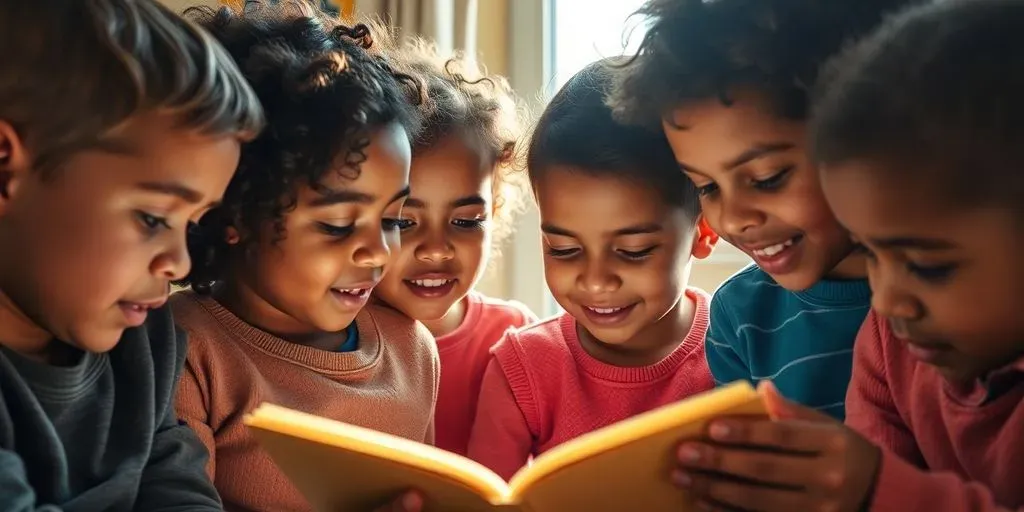
Children's Books as Drivers of Reading Motivation
Children's books are more than just stories; they're powerful tools that can ignite a lifelong love of reading. The right book can transform a reluctant reader into an avid one. It's about finding that spark, that connection between the child and the narrative, the characters, and the world within the pages. When children find books they genuinely enjoy, reading becomes a pleasure, not a chore. This intrinsic motivation is far more effective than any external pressure or reward system. It's about creating a positive association with reading, so children see it as a source of enjoyment and enrichment.
The Challenge of Keeping Pace with Current Literature
One of the biggest hurdles for educators is staying up-to-date with the ever-evolving world of children's literature. What was popular last year might be old news this year. New authors emerge, new genres gain traction, and children's interests shift constantly. It requires a real effort to keep your finger on the pulse and know what's capturing the imagination of young readers. This isn't just about knowing the latest bestsellers; it's about understanding the trends, the themes, and the voices that are resonating with children today. It's about curating a collection that reflects the diversity of children's experiences and interests. Summer reading is a great way to keep up with the latest trends.
The Teacher's Ownership in Promoting Reading
Ultimately, the teacher plays a crucial role in connecting children with books and fostering a love of reading. It's not enough to simply provide access to books; teachers need to actively promote reading, share their own enthusiasm, and create a classroom culture that values and celebrates reading. This means:
- Reading aloud regularly and with passion.
- Providing opportunities for children to share their reading experiences.
- Creating a classroom library that is diverse, engaging, and reflective of children's interests.
- Modelling a love of reading by sharing their own reading habits and preferences.
Teachers need to see themselves as reading advocates, not just reading instructors. It's about creating a community of readers, where children feel supported, encouraged, and inspired to explore the world of books. It's about making reading a joyful and meaningful experience for every child.
Addressing Bottlenecks in Current Reading Education

Identifying Key Issues in Literacy Instruction
It's no secret that current literacy instruction faces some serious hurdles. One of the biggest problems is the over-reliance on rigid methodologies that stifle teacher creativity and student engagement. We're seeing a disconnect between what methods promise and what they actually deliver in terms of fostering a genuine love for reading. The focus often shifts to ticking boxes rather than nurturing a lifelong habit of reading.
The Need for Innovative Solutions
To overcome these challenges, we need to think outside the box. Simply tweaking existing methods won't cut it; we need innovative solutions that address the root causes of the problem. This means:
- Empowering teachers to make informed decisions about their instruction.
- Prioritising engaging and relevant reading materials.
- Creating a classroom environment that celebrates reading for pleasure.
It's time to move away from a one-size-fits-all approach and embrace a more flexible and responsive model of literacy instruction. This requires a willingness to experiment, adapt, and learn from both successes and failures.
Paving the Way for the Open Book Vision
Ultimately, addressing these bottlenecks is about creating a pathway towards a more holistic and effective approach to reading education. The 'Open Book Vision' aims to do just that, by:
- Prioritising reading promotion alongside skill development.
- Encouraging teacher ownership and enthusiasm.
- Recognising the importance of children's books in fostering reading motivation.
By tackling these key issues, we can create a reading education system that truly inspires and empowers young readers.
The School Library App: A Digital Assistant for Literacy
Empowering Educators in Collection Management
It is true that managing a school library's collection can feel like a Herculean task. Keeping track of books, knowing what's popular, and making sure everything is organised? It's a lot! A school library app can be a real game-changer here. It gives teachers and librarians a simple way to see what's available, manage loans, and even track reading habits. Think of it as a digital assistant that frees up time for the more important stuff, like actually helping kids find books they'll love. It also helps with collection development, ensuring the library stays relevant and engaging.
Inspiring Pupils to Read More
Getting kids excited about reading can be challenging, especially when they're glued to screens. But what if you could use that screen time to actually encourage reading? A school library app can do just that. Imagine students being able to browse the library's catalogue from their tablets, read reviews, and even reserve books with a few taps. It focuses on making reading more accessible and appealing. Plus, many apps include features like reading challenges and personalised recommendations, which can really boost motivation. It's about meeting kids where they are and turning screen time into reading time. This can be a great way to promote AI programming in schools.
Improving Literacy Skills Through Digital Tools
Rather than simply encouraging children to read more, the goal is to help them become better readers. A good school library app can offer a range of tools to support literacy development. This might include access to e-books with built-in dictionaries, highlighting tools, and note-taking features. Some apps even offer interactive quizzes and games to test comprehension and vocabulary. It's about using technology to make learning more engaging and effective. The app can also track student progress, providing teachers with valuable insights into individual reading levels and areas where they might need extra support.
The beauty of a school library app is that it brings together the best of both worlds: the rich resources of a traditional library and the convenience and engagement of digital technology. It's a powerful tool for promoting literacy and fostering a love of reading in the digital age.
Here's a quick look at some potential benefits:
- Increased book circulation
- Improved student engagement
- Better data on reading habits
- More efficient library management
Fostering Effective and Efficient Reading Instruction
Balancing Pedagogical Approaches with Practicality
Finding the sweet spot between teaching methods and what actually works in the classroom is key. It's easy to get bogged down in theory, but the real test is whether kids are actually learning and enjoying reading. We need to think about what's manageable for teachers and engaging for pupils, not just what looks good on paper. It's about striking a balance that allows for both structured learning and the flexibility to adapt to individual needs.
Beyond Method-Centric Efficiency
Efficiency in reading instruction shouldn't just be about ticking boxes and getting through the curriculum as quickly as possible. It's about making the most of the time we have, and that means focusing on what truly matters: comprehension, enjoyment, and a lifelong love of reading. Sometimes, slowing down and exploring a text in depth can be more effective than rushing through multiple texts superficially.
The Role of Reading Promotion in Effective Teaching
Reading promotion isn't some add-on activity; it's an integral part of effective teaching. It's about creating a classroom culture where reading is valued and celebrated. This can involve things like:
- Reading aloud regularly
- Encouraging pupils to share their favourite books
- Creating a classroom library with a diverse range of texts
By making reading a fun and engaging experience, we can help pupils develop a genuine love of books and a desire to read more. This, in turn, will have a positive impact on their literacy skills and their overall academic achievement. It's about evidence-based reading strategies that work.
Ultimately, effective reading instruction is about more than just teaching skills; it's about nurturing a lifelong love of reading.
The Open Book Vision: A Holistic Approach to Reading
Core Principles of the Open Book Vision
The Open Book Vision champions a holistic approach, moving beyond fragmented skills-based instruction. It prioritises the joy of reading and the development of a lifelong love for books. This means creating an environment where children are excited to pick up a book, not because they have to, but because they want to. It's about making reading a rewarding experience, not a chore. The comprehensive literacy framework is a great way to achieve this.
Integrating Reading Promotion and Skill Acquisition
It's not enough to just tell kids to read; we need to actively promote reading. This involves:
- Creating inviting classroom libraries.
- Regularly reading aloud to pupils.
- Allowing pupils to choose their own books.
- Connecting reading to real-world experiences.
Reading promotion shouldn't be separate from skill acquisition. Instead, they should be intertwined. As children engage with interesting texts, they naturally develop vocabulary, comprehension, and critical thinking skills. It's a win-win situation.
Future Directions for Reading Education
Looking ahead, the Open Book Vision calls for a shift in how we approach reading education. This includes:
- Embracing technology to enhance reading experiences.
- Providing teachers with more autonomy and support.
- Focusing on authentic assessment that measures reading engagement and comprehension, not just rote memorisation.
- Encouraging collaboration between schools, libraries, and families to create a community of readers.
We need to foster a culture where reading is valued and celebrated. The goal is to make reading an integral part of every child's life, both inside and outside the classroom. This will help them develop into well-rounded, informed, and engaged citizens. It's about more than just reading; it's about opening doors to new worlds and possibilities.
Our 'Open Book Vision' is all about making reading a fun and easy experience for everyone. It helps pupils find books they'll truly enjoy, making reading less of a chore and more of an adventure. Want to see how it works? Explore our website to learn more!
Wrapping Things Up: A New Path for Reading
So, as we finish up, it's clear that the way we teach reading needs a fresh look. The old ways, with their focus on strict methods, often miss the mark when it comes to getting kids excited about books. We've seen how important it is for teachers to have a real connection with what they're teaching, and how that enthusiasm can make all the difference. It's not about forcing kids to read from uninspiring textbooks; it's about helping them find joy in stories and information. When teachers are truly into a book, that feeling spreads to the pupils. This whole idea of a 'different vision' for reading education really pushes us to think about what works best for young readers. It's about making reading a good experience, not just a task. And that's something we should all aim for.
Frequently Asked Questions
What exactly is the 'Open Book Vision' mentioned in the article?
The 'Open Book Vision' is a new way of thinking about reading education. It tries to bring together different parts of learning to read, like enjoying books and learning reading skills, into one complete approach.
How does the School Library app help with reading and learning?
The School Library app is a digital helper for school libraries. It helps teachers manage their books and resources better. It also tries to get pupils excited about reading and helps them get better at it by using digital tools.
Why is the teacher's role so important compared to just following a method?
The article suggests that teachers are very important because their excitement and how they teach can make a difference. It argues that relying too much on strict teaching methods can stop teachers from being creative and inspiring.
What is 'Curriculum 2030' and what does it aim to do?
The article talks about 'Curriculum 2030' as a plan to update what is taught in schools. It aims to make learning more relevant to today's world, balance knowledge with personal growth, and make sure different school levels connect better.
Why do traditional methods often fail to make reading enjoyable?
The article says that using parts of children's books in teaching methods often doesn't work well. This is because the books lose their fun when they are just used as practise texts, and teachers might not feel excited about them.
What are the problems with using themes in reading methods?
The article points out that many current teaching methods use themes that can make learning messy and unorganised, like 'confetti education'. It suggests that themes chosen by the teacher, which connect different subjects, work much better.
How do children's books affect reading motivation?
The article says that children's books are great for making kids want to read. However, it's hard for teaching methods to keep up with new and popular children's books, which can make the methods feel old-fashioned.
What are the main problems in current reading education?
The article suggests that current reading education has problems like not enough time for reading enjoyment and methods that don't excite students. It calls for new ideas to fix these issues and make reading lessons better.
Read Next
- The teacher as pizza maker: a new perspective on reading instruction
- Away with confetti: time for deepening education
- Children's books as serious learning tools
- Reading instruction = communication instruction
- The decisive book: On the power of the right book at the right time
- From reading promotion to literature education
- Why Methods Kill Reading Pleasure (and What We Can Do About It)
The building blocks of a vision on reading promotion - An in-depth analysis
[object Object]
Remember when school felt truly inspiring? When teachers weren't just following a script but genuinely brought subjects to life? It feels like we've drifted a bit from that ideal, caught up in a whirlwind of 'confetti education' — lots of little bits that don't always stick together. This article is all about getting back to what really matters in learning. We're talking about putting the teacher back in charge, moving past those fragmented, theme-of-the-week lessons, and rethinking how we teach so it actually means something. It's time to ditch the confetti and dig deeper. Our focus for this journey? Goodbye confetti education, hello meaningful learning.